ㅔ
Korean vowel · /e/
ㅔ is /e/ — the e in bet — closer than ㅐ. It appears in 19 cells of the syllable chart, 19 of which have audio you can play here.
26 of the 568 words in the dictionary behind this site contain ㅔ — 18% of the bar the most common letter would fill.
| Name | 에 |
|---|---|
| Sound | /e/ |
| Romanized | e |
| Hear it | Recorded by a native Korean speaker |
ㅔ in the syllable chart
19 of 19 cells have audio — 19 with their own recording, 0 borrowing one from an identically pronounced syllable. 0 have none yet.
Letters it gets confused with
- /ɛ/
- /e/
The standard treats these as two different vowels: ㅐ is the more open [ɛ], ㅔ the closer [e]. Article 4 of Standard Korean Pronunciation lists both as separate monophthongs.
In real speech: Most Seoul speakers under 50 pronounce them the same. The spelling distinction is still fully alive, though — 개 (dog) and 게 (crab) are different words — so this site keeps them apart.
Words that use ㅔ
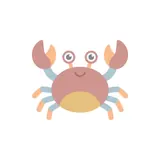
게
crab

네모
square
- 어떻게how
- 네yes
- 네 개four items
- 네 명four people
- 그런데by the way
- 카레curry
Questions people ask
- How do you pronounce ㅔ? +
- ㅔ is /e/. In English terms it is the e in bet — closer than ㅐ. It never appears on its own in writing — it always sits inside a syllable block with a consonant.
- How many strokes does ㅔ have? +
- 3. They are written top to bottom and left to right, the same order used for every Korean letter.